The European Commission (EC) presented a Communication on October 25 entitled “Smart Borders – options and the way ahead,” which proposes new approaches to striking the balance between security and freedom at the EU’s external borders. With the number of external border crossings exceeding 700 million each year and expected to keep rising, there is a need for a more sophisticated approach to border management for the future. The current system of passport stamps is seen as insufficient to rise to future challenges and the “smart borders package” aims to address the deficiencies with new technologies and intelligence-led targeting to separate the vast majority of bona fide travellers from the small number of transgressors, be they irregular migrants, cross-border criminal groups or suspected threats to European security. Meanwhile, for most travellers, the same measures will be noticeable in the form of faster and more efficient border crossings, particularly at airports.
News
Smarter, faster, safer?
2011-12-01
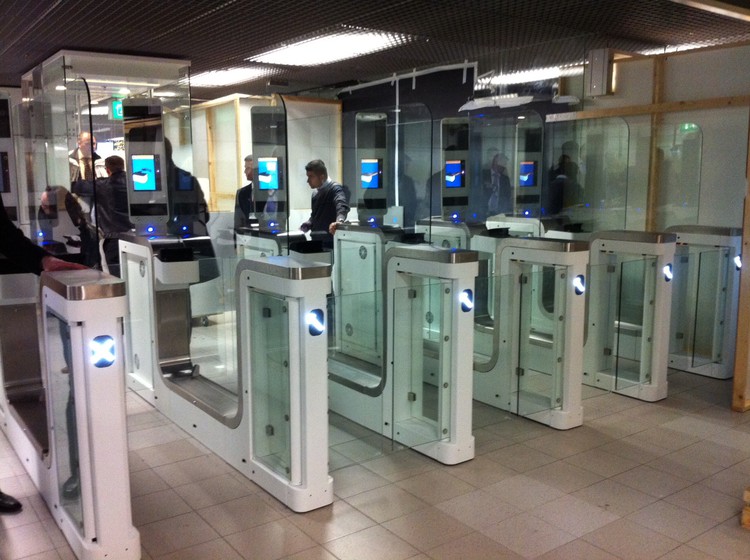
While the term “Smart Borders” is something of a catch-all phrase encompassing a range of possibilities from the ongoing Eurosur European surveillance project, through more sophisticated control and monitoring technologies to greater background scrutiny, the EC Communication focuses on two specific provisions — an Entry/Exit system to tackle the phenomenon of overstaying (arriving in the EU with legitimate documentation but staying beyond the permitted period; believed to be by far the most common modus operandi for irregular migration), and a Registered Travellers Programme to fast-track pre-vetted regular border-crossers such as business travellers, through the application of biometric passports and automated border crossings.
Frontex and the way forward …
Member States are increasingly interested in Automated Border Crossing (ABC) solutions as a way of making the border crossing process faster and smoother for the EU’s citizens. But, due to the relative immaturity of these systems and the limited number of operational implementations, there is a need for exchange of experiences and lessons learned. To this end, the Frontex ABC workshops provide a platform for open communication and peer discussion among national authorities and other stakeholders.
The sixth workshop in the series took place in Amsterdam on November 29-30, bringing together over sixty participants representing national authorities and EU bodies as well as key industry players to discuss the latest developments in the solutions currently in use, under testing, or planned by Member States, and highlighted the need for a coherent approach towards the development of ABC systems in Europe. They were also offered the opportunity to interact with the No-Q system at Schiphol airport, an ABC system based on facial recognition technology [The No-Q system went live on 20 March 2012].