Since 2009, the Italian Calabria and Puglia regions — the ‘toe’ and ‘heel’ of Italy respectively — have been subject to an increasing flow of irregular migrants originating from Asian countries, departing by boat from the Turkish coast, and circumnavigating Peloponnesus on their way to Italy. During 2010 and 2011 there have also been cases of migrants who had been gathered on the Greek mainland and departed from the Greek coast towards Puglia.
News
Luxury Smuggling
2011-05-06
The operational area of Aeneas has also been targeted in several cases by steel and wooden vessels which had departed from the Egyptian coast. The sharp increase of incidents and migrants detected in Calabria and Puglia in 2010 compared with 2009, showed the need to launch a joint operation in the areas affected.
Reasons that may explain the increasing use of this route are linked to the effectiveness of the measures undertaken to counter the migration flows from the Turkish coast towards the Greek islands in the Aegean Sea (see story p. 14). Such measures include, among others, Joint Operation Poseidon Sea, the Greek-Turkish agreement for the readmission of 1,000 migrants per year, the interception of several facilitators by the Greek Coast Guard, and the strict penalties imposed by Greek law that have resulted in the displacement of migration flows from the Greek Turkish sea borders to the land borders, and consequent secondary movements.
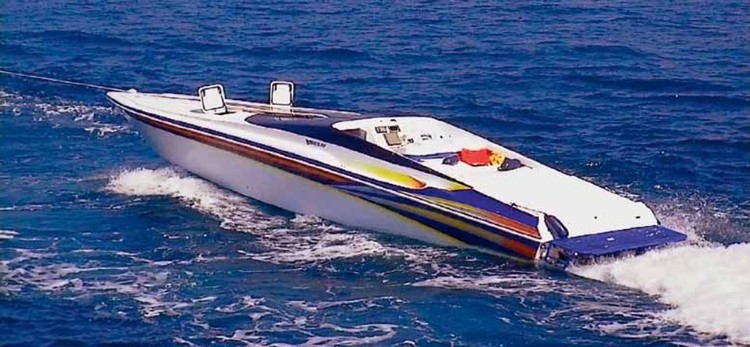
The nature of the migration flows on this route differs from its predecessors, however. In most cases, migrants have reached the coast of Calabria on board high-class sailing boats and yachts. The use of such a long-distance sea route towards the south east coast of Italy requires an adequate type of vessel such as sailing boats, yachts and large fishing vessels. The presence of skilled facilitators on board these vessels also helps to avoid areas patrolled by law enforcement agents along the route and provides safety when navigating in bad weather conditions. These routes are more expensive for migrants, but provide them with a safer journey and a higher possibility of avoiding readmission to their country of origin.
The successful accomplishment of such a journey also necessitates the involvement of members of criminal networks in countries of origin and transit, as well as a certain degree of cooperation with criminal groups active within the Member States. Facilitators of various nationalities have been identified and arrested, mainly involved in the sea crossing.
Ukrainian facilitators were mostly involved in cases concerning sailing boats reaching the coast of Calabria, but Turkish, Iraqi, Greek, Russian and Palestinian nationals have also been arrested for providing facilitation services, indicating the active involvement of criminal networks with an international scope.