January opened the year with exactly what defines European border management at its best: officers going beyond their duty to save lives, instincts that catch what paperwork tries to hide, and partnerships that stretch from mountain tracks in Albania to airport gates in Prague and reception centres in Cyprus.
News
Last Month in the Field – January
2026-02-25
Albania: Six kilometres, minus three degrees, one life saved
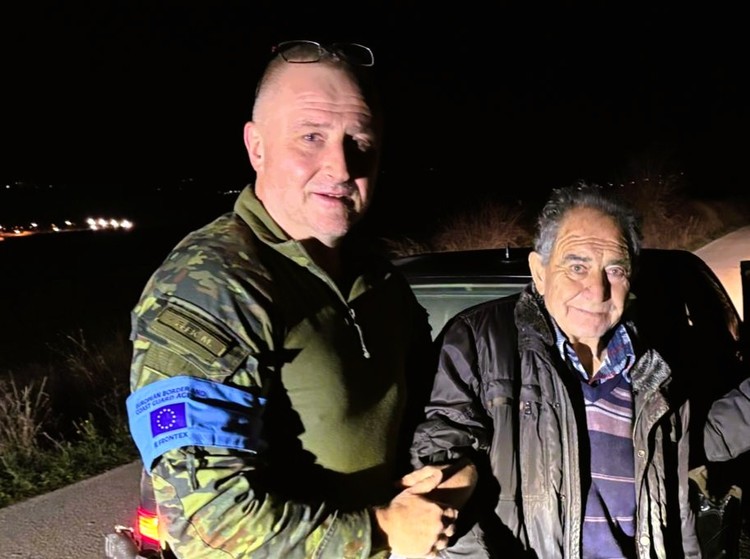
In the Albanian mountains, a routine winter day turned into a race against the clock. At -3°C, a 78-year-old man went missing in the rugged terrain near his home. As darkness fell, Frontex officer Maciej and his Albanian colleague did not hesitate: they joined the search, knowing that every minute in those conditions mattered.
Hours later, just before midnight, a thermal camera picked up a faint signature in the cold. Six kilometres from his home, the missing man was found exhausted, disoriented but alive.
Behind that moment stood more than technology. It was the result of teamwork, quiet coordination in the background, and a willingness to go the extra mile long after the shift could have ended. This is what it means to serve, to protect, and, quite literally, to save lives.
Greece - Kipi: When “casino winnings” don’t add up
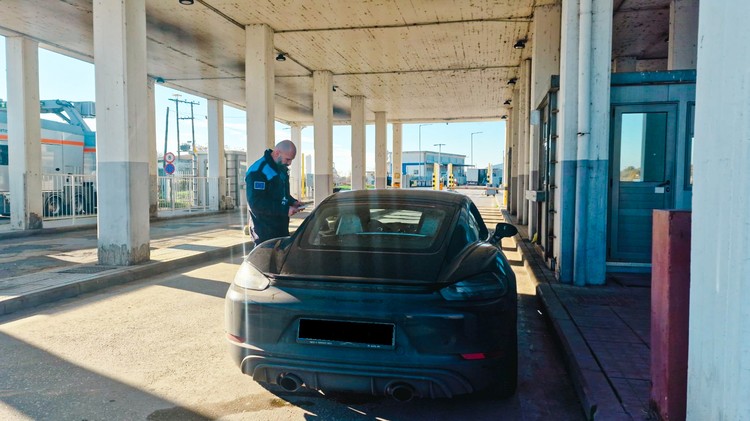
At the Kipi border crossing point in Greece, officers have developed what they jokingly call a “police instinct”: a sixth sense for situations that don’t quite fit the story being told.
In January, that instinct focused on a Turkish citizen carrying €30,500 in cash. His explanation was simple: “casino winnings”, but his documentation was not. There was no customs declaration, no proof of origin, no supporting evidence. The result: the money was seized pending clarification.
The case is a reminder that good luck at the tables does not exempt anyone from the rules at the border. Declaring large sums of money is not a formality; it is a safeguard against money laundering, organised crime, and illicit flows. If you really do win €30,500, just declare it and let your good fortune travel with you legally.
North Macedonia: A million reasons to check again
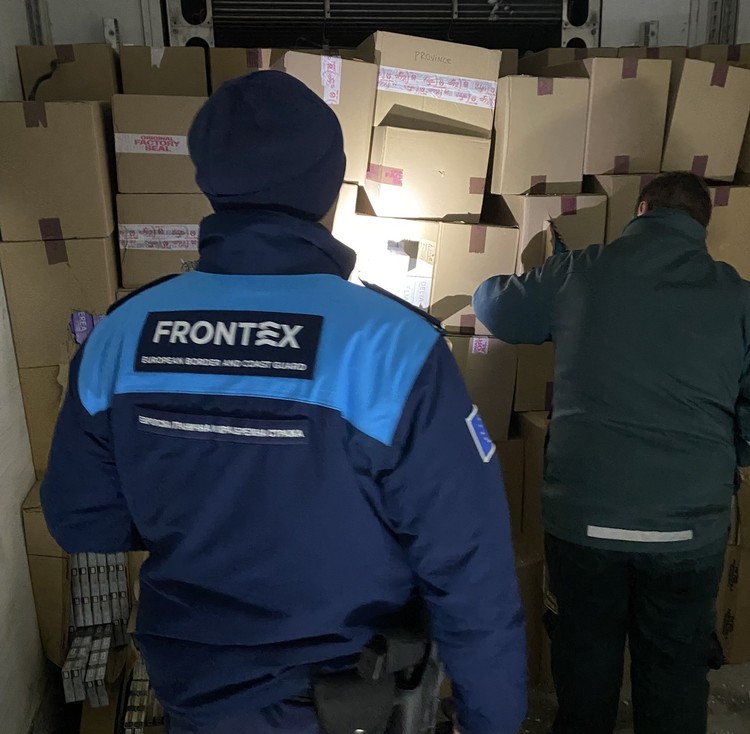
In North Macedonia, Frontex and the national authorities intercepted a huge smuggling attempt that showed why meticulous checks and the right tools matter. Using high-tech borescopes, officers examined a suspicious vehicle and discovered a sophisticated false partition. Hidden behind it were more than 850,000 tobacco sticks and 160,000 cigarettes. Over a million items in total. Further investigation revealed a falsified Vehicle Identification Number (VIN), confirming the vehicle itself was part of the criminal operation. The driver was immediately arrested.
The operation highlighted excellent cooperation between Frontex and North Macedonia and demonstrated how technology, training, and persistence combine to expose even well-concealed smuggling schemes. Together, we stand against cross-border crime that undermines public finances, public health, and security.
Bogorodica: Keeping illegal weapons off the streets
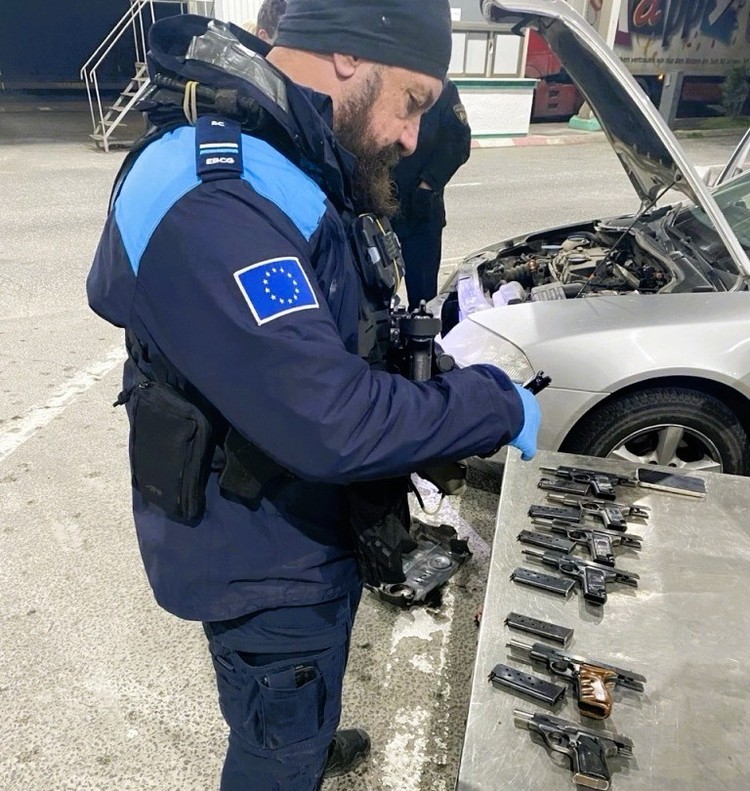
At the Border Crossing Point Bogorodica, Frontex officers and North Macedonia Customs wrote another chapter in their joint success. What began as a careful vehicle inspection led to the discovery of seven pistols manufactured in the former Yugoslavia, hidden deep inside the roof structure.
From the first suspicion at the lane, through the detailed check, to the safe handling of the weapons by a Frontex armorer, the operation showed how different skills and services fit together. Those seven pistols will never reach European streets.
Security is, above all, about staying one step ahead. And about making sure that weapons stay in the hands of those who protect, not those who would do harm.
Nicosia: Partnership with IOM: different roles, shared responsibility
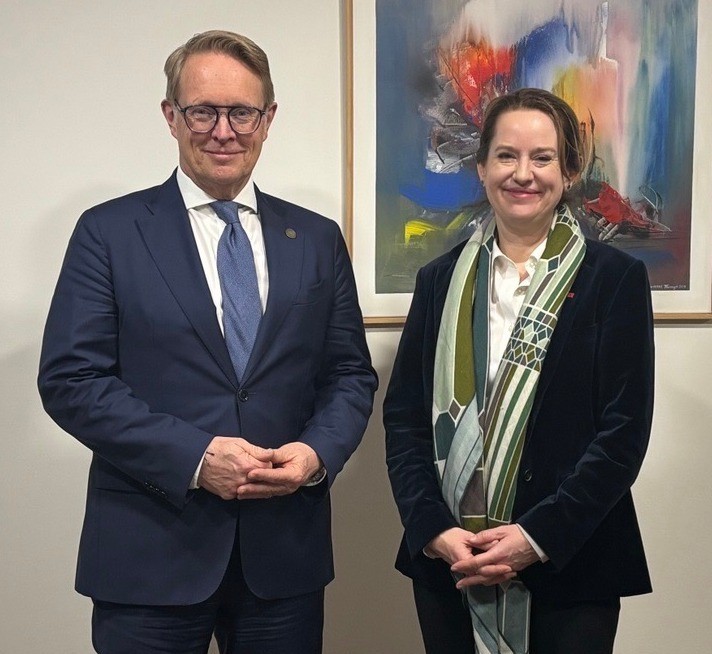
In Nicosia, Frontex Executive Director Hans Leijtens met with International Organization of Migration Director-General Amy Pope to discuss one of the Agency’s most important partnerships. IOM’s global reach and long experience in migration, combined with its strong focus on people’s rights, make it a natural counterpart for Frontex in many operational contexts.
The discussions centred on how to further develop cooperation, including in non-EU countries where both organisations are present. The shared goal is to ensure that responses to migration challenges are not only effective, but humane and grounded in international and EU standards.
Strong partnerships like this help EU Member States manage borders and migration in a way that protects both security and fundamental rights. Two sides of the same responsibility.
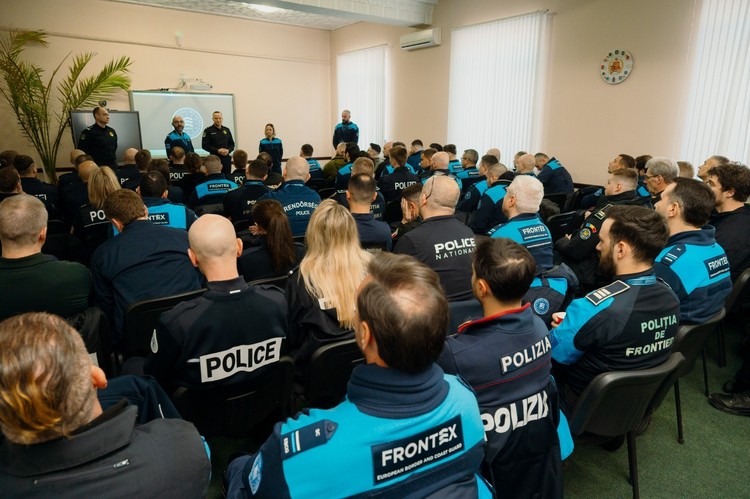
Moldova: Operation “Moldova-2026” in full swing
In the Republic of Moldova, cooperation between the Border Police and Frontex has entered its fifth operational cycle under Operation “Moldova-2026”. At the Inspectorate General of the Moldovan Border Police, officers from Moldova and Frontex met for an operational briefing, setting priorities and synchronising activities.
The operation is based on the agreement signed in Brussels on 17 March 2022 between Moldova and the European Union, which enables Frontex to support the control and surveillance of state borders. Today, the Agency’s activities cover checks at four Moldovan-Romanian and four Moldovan-Ukrainian border crossing points, as well as border surveillance across eleven Moldovan Border Police sectors along the Moldovan-Ukrainian frontier.
Moldovan and Frontex officers work together to ensure effective, secure control over a border region that has become even more strategically important in recent years.
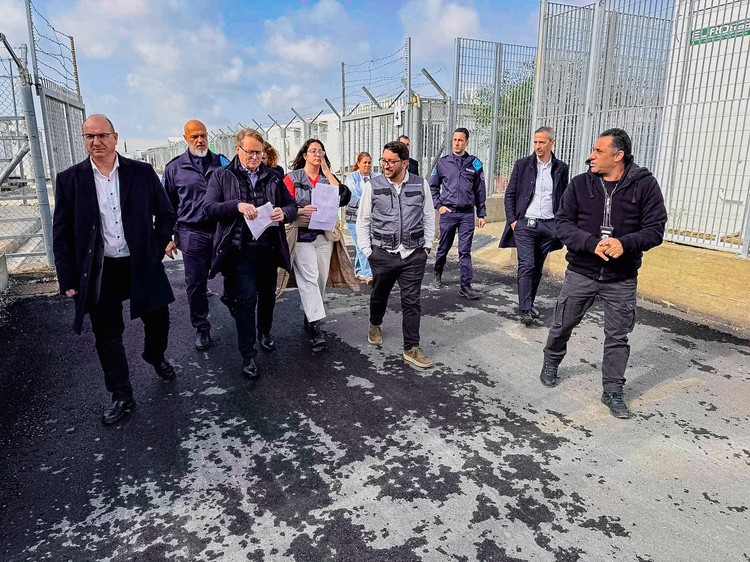
Cyprus: Partnership on the frontline
During his visit to Cyprus, Executive Director Hans Leijtens saw up close what European partnership looks like in day-to-day work. From the Pournara First Reception Centre to frontline operations at Larnaca Airport, the visit highlighted Cyprus’s vital role in Europe’s integrated border management.
Frontex teams support Cypriot authorities in detecting document fraud, managing migration flows, and keeping border procedures smooth and predictable for travellers. As Cyprus takes over the EU Council Presidency and continues its path toward joining the Schengen free-travel zone, the message from the ground is clear: Europe stands together and Frontex stands with Cyprus as a committed, trusted partner.
Strong borders are not built in isolation. They are built through cooperation, shared standards, and shared responsibility.
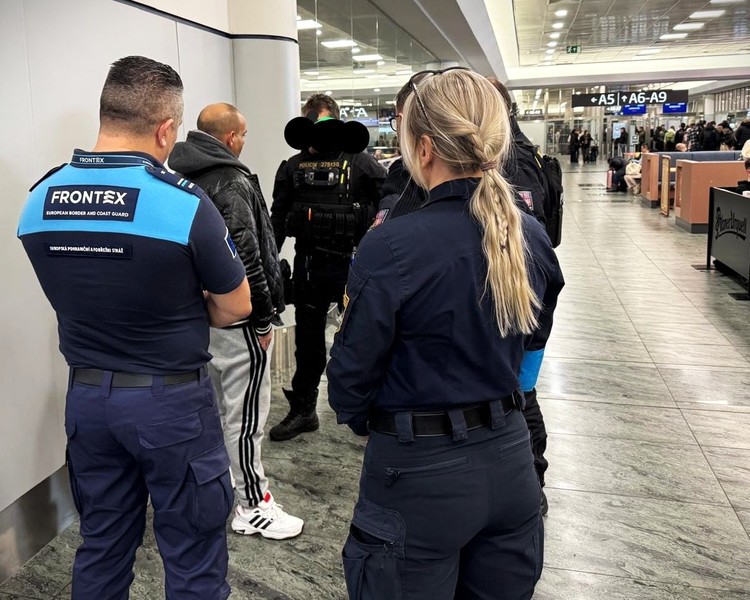
Prague: One alert, one gate, one arrest
At Prague Airport, a passenger arrived expecting to have a nice time in the city, but the border guards had different time in mind. Before the plane touched the ground, the Advance Passenger Information (API) system had alerted officers that one of the incoming travellers was wanted by the United Kingdom. A name, a silent signal, a few lines of data – and the operation was already in motion.
When passengers disembarked, Frontex officers and their Czech colleagues identified the individual swiftly and handed him over to the competent national authorities, all in line with the Frontex mandate and without disrupting the airport’s normal operations.
The case showed how three elements can converge in a matter of minutes to protect the EU’s borders and internal security: early intelligence, cross-border cooperation, and real-time action. Quietly, efficiently, and with minimal impact on other travellers, a potential threat was taken off the passenger list.
January in focus: Quiet acts, big impact
From a freezing mountain rescue in Albania to a hidden false partition in North Macedonia, from partnership talks in Nicosia and Cyprus to silent arrests at Prague airport, January reminded us that many of the most important moments in border management never make headlines. They happen in the beam of a searchlight, in a decision to check “one more thing,” in a briefing room where partners finalise their plans, or in a few seconds at an airport gate.
Through all of them runs the same commitment: to serve, to protect, and, when needed, to save lives. All this always through cooperation, and always with Europe’s laws and values as the compass.