The third
quarter (Q3) of 2013 saw a massive upswing in irregular migrants arrivals in the
Central Mediterranean. This, combined with sustained detections in the Ionian
and Eastern Aegean Seas, meant there were more detections of illegal
border-crossing at the EU maritime borders than during the height of the 2011 ‘Arab
Spring.’ There were also more applications for international protection than at
any other time since data collection began for this indicator in 2008.
Syrians were the most detected nationality at EU level in terms of irregular border
crossing (across several locations and border types) as well as in terms of clandestine
entry, illegal stay, and document fraud at both the external border and on
intra-Schengen flights. Additionally, Syrians submitted more applications for
asylum than any other nationality. Across the spectrum of indicators used to
identify trends, Syrians clearly stood out.
There were 42,618 detections of illegal border crossing
in Q3 2013 at the EU level — almost twice the level of Q3 2012 — and a
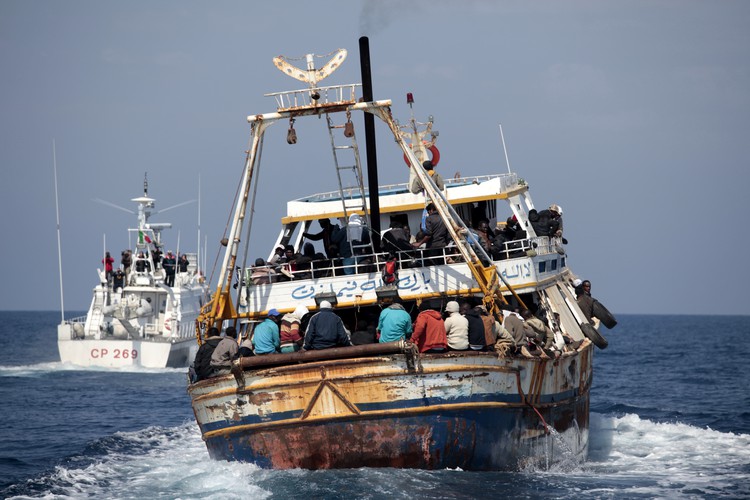
four-fold increase on the first quarter of 2013. This was almost exclusively
due to increased detections from the Italian sea border, mostly reported from Sicily
and off the island of Lampedusa, where detections totalled more than 12,000 and
8,000 respectively.
Across the region the use of large ‘mother-ships’ became more common, an
earlier-identified modus operandi involving the towing of smaller vessels for
transfer of migrants when closer to shore.
In Greece, previously the main EU hot-spot , detections remained stable between
the second and third quarters but were still high enough for Greece to be
ranked number two for illegal entry. This is because Greece continued to be
affected by two independent flows of irregular migration: via both Turkey and
Albania. However, since Greece reinforced its land border with Turkey in August
2012, detections there have dropped to negligible levels.
Elsewhere meanwhile, detections have increased, particularly in the Eastern
Aegean Sea and at the Bulgarian land border with Turkey, which in the third
quarter ranked fourth and fifth among all sections of the EU external border.
In these two locations detections increased going into the third quarter,
mostly of Syrians, and to a lesser extent of Afghans. In Bulgaria, the 600%
year-on-year increase in detections was the largest in the EU and was
accompanied by an increase in asylum applications.
Nationalities
Syrians and Eritreans were the most commonly
detected nationalities, followed by Somalis and Egyptians. While most migrants arriving
by boat had set sail from Libya, many Egyptians had left from their own
country. There were also increased detections of Syrians and Eritreans in
Apulia and Calabria, in southern Italy, putting these nationalities on top for
detections at EU level. Detections of Eritreans increased the most in
comparison to the same period last year.
After Sicily and Lampedusa, the next most affected border section was the
Hungarian land border with Serbia, where detections fluctuated dramatically
throughout 2013 in response to a series of legislative changes affecting asylum
seekers. Detections here were almost twice that of a year earlier but 50% down
on the previous quarter.
Albanians
At the Greek land border with Albania, detections of
illegal border-crossing remained stable compared to the previous year, almost
exclusively of Albanian ‘circular’ migrants moving for seasonal work.
Detections of Albanians using document fraud to gain entry to Greece decreased
in Q3 2013, but refusals of entry and detections of illegal stay increased for Albanians to 1
471, the highest level seen in Greece for several years. Given that Albanians
were also widely detected in other member states, particularly using fraudulent
documents to enter the UK from the Schengen area, and as illegal stayers and
subject to decisions to leave in France, the irregular migratory pressure from
this nationality remains high.
Document
fraud
Use of fraudulent documents was
increasingly detected in the Q3 2013 both in terms of detections at the
external border and also of migrants making secondary movements within the
Schengen area, or attempting entry to the UK. Spain, Italy, France and Greece
detected the highest numbers at the external borders, together accounting for
more than half of all detections at EU level. For the second quarter in a row,
Spain reported more detections than ever before, the most common of which being
Moroccans detected at either Melilla or Ceuta.
News
Irregular Arrivals Were at Record High in the Third Quarter of 2013
2014-01-31