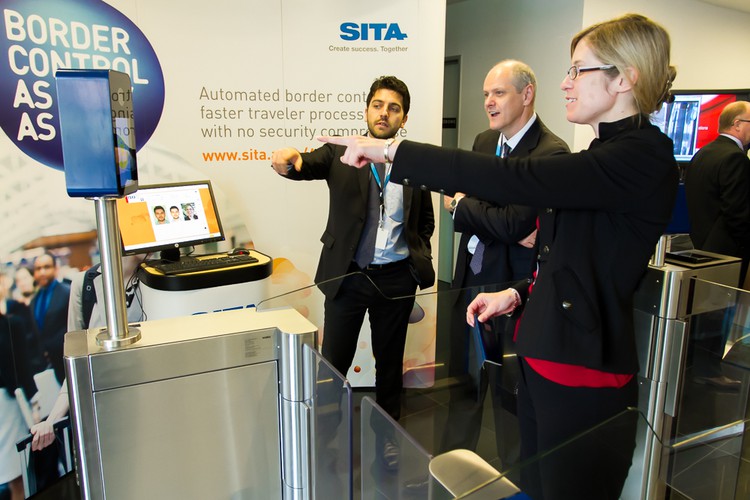
The conference report summarises the discussions and key conclusions reached at the Second Global Conference and Exhibition on future developments in Automated Border Control (ABC), co-organised by Frontex and the European Commission on 10-11 October 2013 in Warsaw.
The conference highlighted that the traditional border-control model faces important challenges, resulting from increasing travel flows and changing travel patterns. Within this context, new state-of-the-art technological solutions can help promote more effective and efficient border controls.
However, technology is not an end in itself but a means to serve policy objectives. The European Commission drives forward the policy work needed to further develop EU integrated border management with the support of Frontex on the operational side, while eu-LISA, the EU Agency for large-scale IT systems, manages the technical implementation of new border management systems.
The success of ABC deployments depends, crucially, on gaining passengers’ acceptance and reaching high levels of usage. This requires that, in the design of ABC solutions, the passenger should always be kept at the heart of the process.
Another success factor concerns the establishment of close cooperation and mutual trust, notably between border management authorities and airport operators. Such trust presupposes the recognition of a common interest in facilitating passenger flows.
But ABC deployments are not merely an efficiency issue. Border management technologies have important societal implications and data protection authorities should be involved in the design and implementation of ABC solutions. Citizens should remain confident that their biometric data are properly handled.
Also importantly, the role of the “human factor” of border guards continues to be essential in the operation of ABC systems. ABC is not about replacing the border guard with technology, but about providing a tool to support their work.
Finally, ABC itself is not enough — it is only one step of the travel process. The future lies in integrated solutions which rely on the handling of data in order to facilitate passenger flows and maintain the border security.
For a more comprehensive and detailed summary of the topics discussed, please download the full conference report here.