At the end of February, the European Commission put forward proposals to introduce a future vision for the European Union's border checks.
This vision of the future relies to a large extent on technology to improve security, convenience and cost-effectiveness in border control where a key enabler is the use of biometrics. The Smart Borders package was presented to the Council and the European Parliament by Commissioner for Home Affairs Cecilia Malmström as a means of creating an “Open, secure Europe,” that will facilitate, speed up and reinforce the border-check procedures at the EU external borders for third-country nationals.”
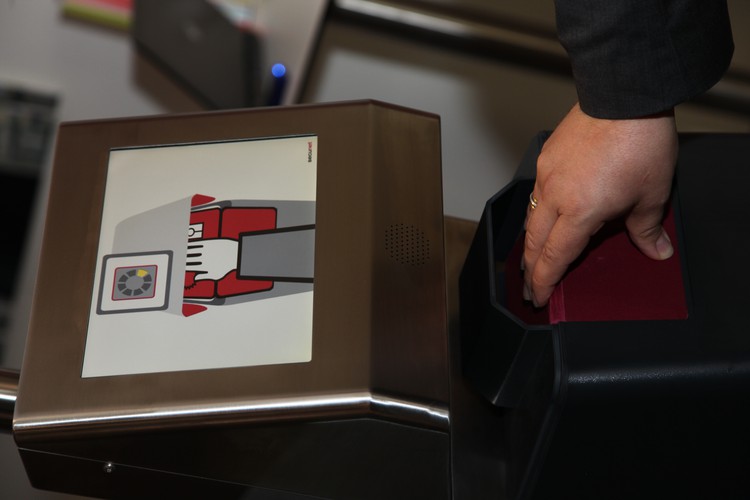
The proposed package consists of two major initiatives — an Entry-Exit System (EES) and a Registered Traveller Programme (RTP). The EES will record the time and place of entry and exit of third country nationals travelling to the EU. The system will calculate the length of the authorised short stay electronically, replacing the current manual stamping system, and issue an alert to national authorities when there is no exit record by the expiry time. The RTP will allow frequent travellers from third countries to enter the EU using simplified border checks, subject to pre-screening and vetting. The RTP will make use of automated border control (ABC) systems at border crossing points such as airports that make use of this technology.
Following the announcements, some media reacted as if a revolution were taking place in EU border control, however technology, and in particular biometrics, have been playing an increasing role in European border management for some time already.
Many of the developments at Europe’s borders in recent years have been information based. From the Visa Information System (VIS) to facilitate the identification of visa holders and prevent identity theft thanks to the use of biometrics, to the Schengen Information System (SIS) to monitor individuals of interest to Member State authorities, an increasing reliance on information management has long marked the direction of border control at both Member State and EU level.
The latest proposals — EES and RTP — are both natural extensions of the need for a more balanced approach to border security and the safeguarding of free travel within the Schengen area. As Ireland’s Minister for Justice and Equality Alan Shatter, Chair of the Council, said after the meeting:
“Securing Europe’s borders is a vital element in ensuring the free movement rights of European citizens. We must take full advantage of the opportunities new technology provides to combine strong security at our borders with ease of travel for legitimate travellers.”
And herein lies the essential dichotomy of border control: creating an effective barrier to cross-border crime and illegal immigration while at the same time facilitating travel at the borders. How to find the balance between security and facilitation is a core question often raised by border management authorities. Security has been central to border management for as long as international travel has existed. However, facilitation is one aspect that deserves more attention particularly as it offers the potential to deliver significant benefits, including increasing processing capacity, operational efficiency and better risk management at the borders.
On the Move
People are travelling more than ever before, and the trend is set to continue. The European Commission expects the volume of air travel to increase by as much as 80% by 2030 — to 720 million passengers a year from just 400 million in 2009.
As international travel flows continue to rise, the pressure to process large volumes of people at the borders will also continue to grow. Yet, the traditional approach to border control poses a number of operational and business challenges to border management services and is unsustainable in the longer term. A shift towards a more balanced risk-based approach has long been envisaged and developing steadily for some years.
But rather than increase capacity in the old system, it is possible to rearrange the process so that travellers are checked partly or in full before their arrival to the physical border. This reduces the time to check travellers at the border crossing point, or even the need to check them at all if they are pre-cleared and considered to be low risk.
At the forefront of this risk-based approach is the collection and analysis of reliable advance information about travellers coming to the border. Transmission of Advance Passenger Information (API) has been covered by an EU directive since 2004. Whenever an airline brings people into the EU it has to forward the passengers’ details to border management authorities prior to the arrival of the flight. In this way, passenger lists can be automatically cross-checked against national and European watch-lists to identify those few travellers who are of interest to border guards.
Frontex supports the future Union initiatives and measures relating to the management of external borders. The EES and the RTP proposed by the European Commission are valuable tools for providing risk-based facilitation to a wider group of travellers. Frontex has played a proactive role in following latest technological developments in Europe and worldwide, and at the same time fostering practical cooperation among Member States’ authorities and other stakeholders involved in border management as regards facilitation and security needs at the borders.