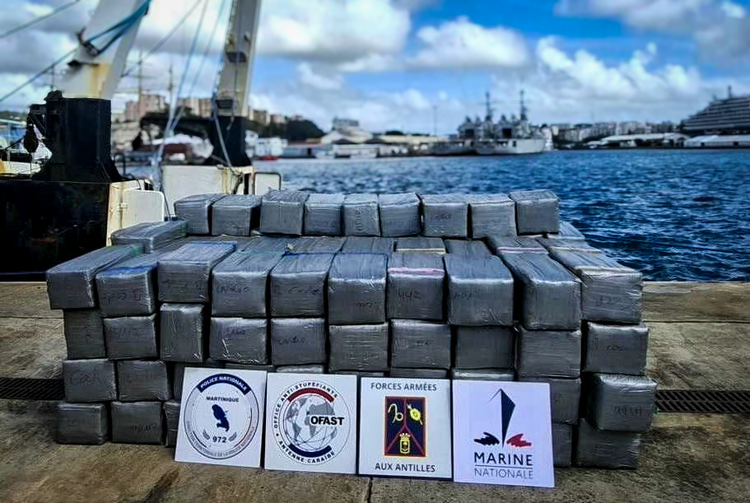
For weeks, Frontex monitored a fishing vessel that appeared determined to disappear. That sustained effort helped lead to the seizure of more than four tonnes of cocaine and the arrest of ten suspects linked to a Greek criminal network.
On 14 December, the French Navy intercepted the vessel in the Caribbean Sea, brining a complex international investigation to a close. Ten suspects linked to a Greek criminal network were arrested, marking the end of the coordinated efforts led by the Greek authorities with support from Frontex in close cooperation with Europol.
Frontex played an important role in the operation by tracking the vessel over long distances and across jurisdictions, even as it tried to hide its whereabouts. A key part of Frontex’s support came through Eurosur Fusion Services, which help authorities share and combine information on what is happening at sea. By bringing together satellite images, vessel tracking data and operational intelligence, Frontex was able to build a clear picture of the vessel’s movements and help authorities decide where and when to act.
“This case shows the value of staying the course,” said Frontex Executive director Hans Leijtens. “Criminal networks rely on distance and invisibility. Our job is to remove both.”
“Organised crime does not stop at borders. Neither can the international response,” he added.
When the vessel was boarded, evidence of drug trafficking was found on board, leading to arrests at sea and on land in Greece.
The operation underlines how cross-border crime can only be tackled through close cooperation. By combining national investigations with European-level surveillance and information sharing, authorities were able to disrupt a major trafficking route stretching from Latin America to Europe.