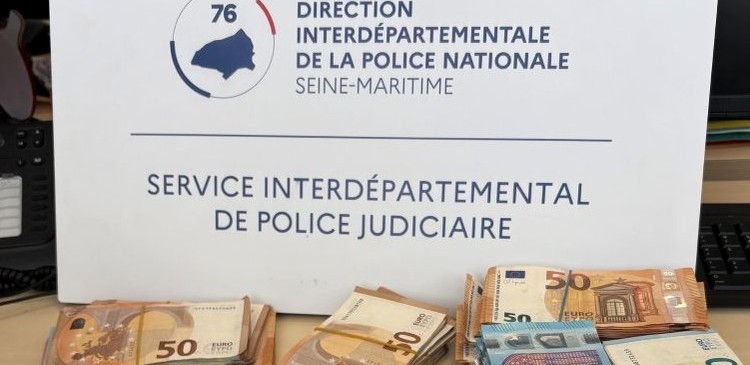
Over 2 000 victims and potential victims identified in Operation Global Chain, a worldwide action spanning five continents.
A worldwide operation against human trafficking has led to more than 1000 arrests and the identification of more than 2 000 victims and potential victims, including 162 children. Officers from 59 countries joined forces in Operation Global Chain, carried out between 8 and 12 June 2026 with the support of Europol, Frontex, and INTERPOL.
In total, more than 40 000 officers took part in the action, which was coordinated under the European Multidisciplinary Platform Against Criminal Threats (EMPACT). The operation targeted criminal networks involved in sexual exploitation, forced labour, forced begging, and forced criminality, with a particular focus on identifying and protecting children and other vulnerable victims.
The operation’s results include:
- 1 024 arrests, 334 of them for human trafficking offences;
- 2 070 victims and potential victims identified, including 162 children;
- 201 additional suspects identified in ongoing investigations;
- 465 new criminal investigations launched;
- 80 cases of document fraud detected.
Investigative findings show that the vast majority of identified victims were adult women. Nearly two thirds (64.2%) were trafficked for sexual exploitation, while 20.9% were exploited for forced criminality, 11.3% for forced labour, 1.5% for forced begging and 2.1% for other forms of exploitation.
Among child victims, sexual exploitation was even more prevalent, accounting for 86.4% of all identified cases. Other forms of exploitation included forced labour (6.2%), forced begging (3%), forced criminal activities such as pickpocketing (around 0.6%), and other forms of exploitation (3.8%).
Protecting child victims remains particularly challenging, as many are exploited by members of their own families.
As an operational partner under EMPACT, Frontex, the European Border and Coast Guard Agency, supported Operation Global Chain by facilitating cooperation between border and law enforcement authorities, strengthening information exchange, and contributing funding for the joint action. The Agency also helped participating countries detect cross-border criminal activity, identify victims of trafficking, and strengthen investigations into organised criminal networks.
The findings underline that human trafficking remains one of the most profitable forms of organised crime, making international operations such as Global Chain a central pillar of the EU’s response.
A coordinated international response
The operation brought together police, border guards, customs authorities, labour inspectorates, and other specialised services across Europe, Africa, Asia, and the Americas.
Two coordination centres operated simultaneously in Skopje, North Macedonia, and Rio de Janeiro, Brazil, allowing participating countries to exchange intelligence and coordinate their actions in real time.
During the operation, participating authorities checked more than:
- 565 000 people
- 360 000 identity documents
- 140 000 vehicles
- 20 000 locations
- 6 100 flights and vessels