Frontex, the European Border and Coast Guard Agency, has piloted a system that allows patrol vessels to verify the authenticity of the satellite signals they rely on to navigate, a growing concern in the Black Sea, where jamming and spoofing are persistent. The pilot, run in cooperation with the Romanian Border Police and European partners, used Galileo, the EU’s satellite navigation system. Romania has now launched a tender for new coastal patrol vessels that will be required to carry the same capability.
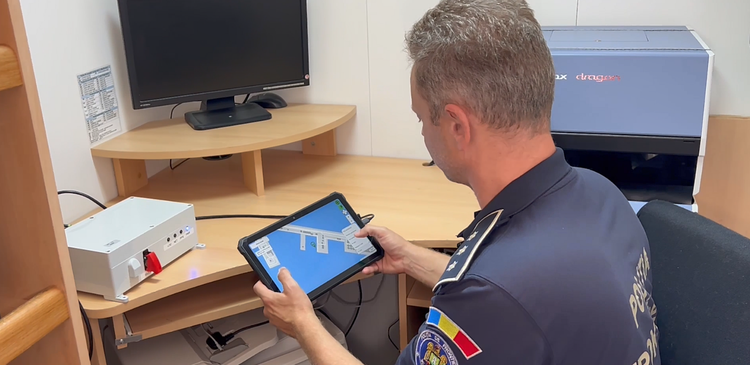
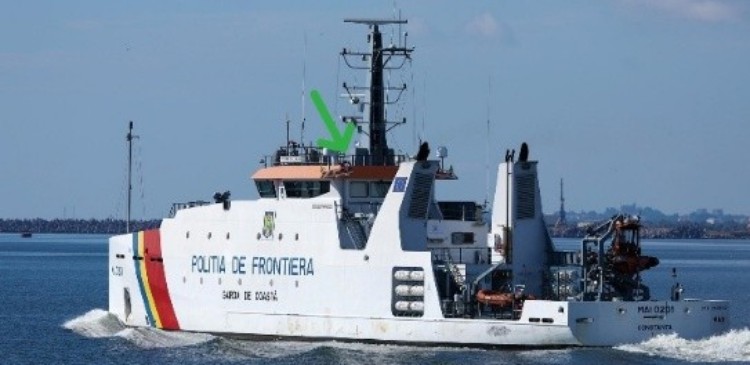
The Galileo-enabled Asset Tracking Demonstrator was conducted between August and September 2025 on two Romanian patrol vessels deployed in Joint Operation MMO Black Sea, a Frontex-coordinated maritime operation supporting Romania and Bulgaria. Receivers tailored to Frontex requirements transmitted verified position data to Frontex headquarters, along with alerts on hazards, on jamming and spoofing attempts, and on whether the vessels were in active operation or on standby. The capability rests on the Open Service Navigation Message Authentication (OSNMA), a free Galileo security feature that lets users check whether a satellite signal is genuine.
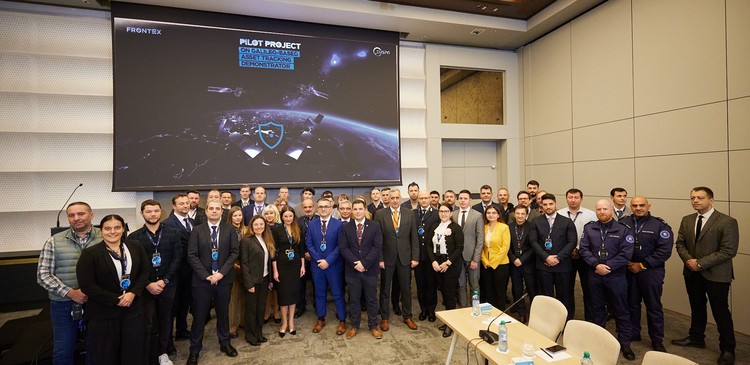
The Demonstrator was delivered jointly by Frontex, the European Union Agency for the Space Programme (EUSPA), the Joint Research Centre and the Romanian Border Police, with technical support from contractor FDC.
Verifiable positioning has become an operational priority in the Black Sea, where satellite signals are increasingly jammed or spoofed. Reliable, verifiable signals support patrol planning, search and rescue, and the prevention of cross-border crime. They also reduce the risk of officers acting on positioning data that has been tampered with.
The Asset Tracking Demonstrator is part of a wider effort by Frontex, the European Commission (DG HOME and DG DEFIS), EUSPA and the Joint Research Centre to bring capabilities developed under the EU Space Programme into day-to-day border and coast guard work. Frontex and the Romanian Border Police have collaborated on operational and capability development for nearly two decades, and currently work together under Joint Operation Romania 2026, with 275 Standing Corps officers deployed alongside Romanian forces. Further capability development activities are planned.
The tender can be viewed under reference 329952-2026 on the EU’s Tenders Electronic Daily portal.