The number of irregular border crossings
into the European Union continued to fall in the first four months of 2026,
with detections down by 40% compared with the same period last year. Just over
28 500 crossings were recorded, according to preliminary data collected by
Frontex. The decline reflects a combination of factors, including sustained
cooperation with partner countries, preventive measures in key departure states
and difficult weather conditions earlier in the year.
- The Central Mediterranean
and the Eastern Mediterranean were the busiest routes, each accounting for
around a third of all irregular entries into the EU.
-
The Western African route
saw the steepest decline, with detections down by 78%, largely as a result of
preventive measures taken by Mauritania, Senegal and The Gambia in cooperation
with Spain and the EU.
-
The Western Mediterranean
was the only major route to record an increase, with detections up by 50%,
driven mainly by departures from Algeria.
The overall number of irregular arrivals
continues to fall, but the human cost remains devastating. According to the International
Organization for Migration, over 1 200 people have lost their lives in
the Mediterranean so far this year. Criminal smuggling networks continue to
send people out on dangerous crossings in overcrowded and unseaworthy boats,
regardless of the conditions.
The volatile security situation in the
Middle East continues to carry risks for the EU’s migration landscape. The
conflict has displaced large numbers of people across the region, and ongoing
instability in Lebanon raises particular concerns, along with the risk of sea
departures towards Cyprus and other Mediterranean destinations. Frontex
continues to monitor developments closely.
With over 3 800 officers present at
the EU’s external borders, Frontex continues to support national authorities in
safeguarding Europe’s borders and saving lives at sea.
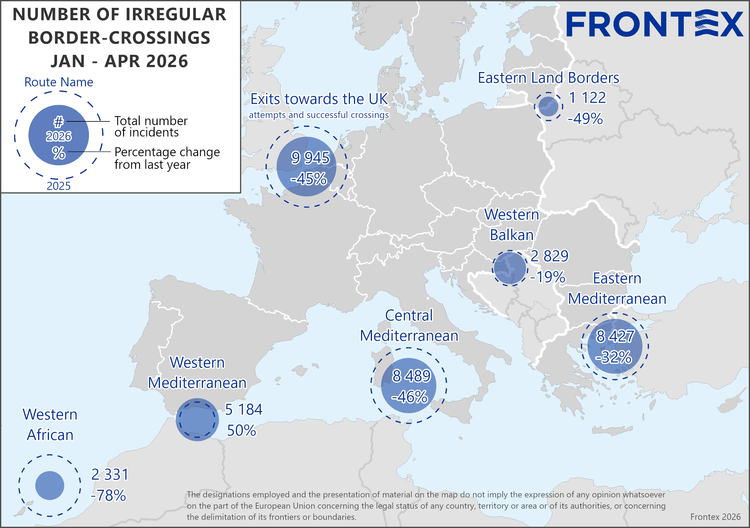
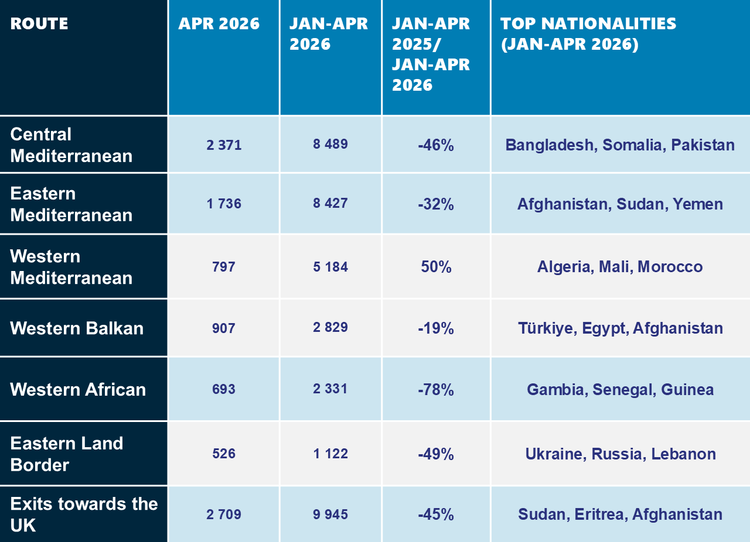
The Central Mediterranean was the
busiest route in the first four months of the year, with around 8 500 arrivals
recorded, a decline of 46% compared with the same period last year. Libya
remained the main departure point, accounting for the vast majority of
crossings on this route. Political dynamics in countries of departure and
origin, as well as preventive measures by the Libyan authorities, continued to
shape the flow. The main nationalities detected were Bangladeshi, Somali and
Sudanese.
The Eastern Mediterranean recorded
around 8 400 crossings, a fall of 32%. While some corridors saw notable
decreases, the Libya-to-Crete corridor remained active.
The Western Mediterranean was the
only major route to register an increase, with around 5 200 detections, up by
50% year-on-year. Algeria remained the main departure country. The rise
reflects a shift in smuggling routes, as stricter controls in Morocco and on
the neighbouring Western African and Central Mediterranean routes have pushed
more departures towards Algerian shores.
The Western Balkan route registered
around 2 800 detections, a decline of 19%. The Croatian border with Bosnia and
Herzegovina remained the main exit point from the region. As weather improves
and migrant mobility increases, the route is expected to come under growing pressure
from secondary movements linked to the Eastern Mediterranean.
The Western African route registered
around 2 300 detections, making it the steepest decline of all routes at 78%.
Preventive measures implemented by Mauritania since spring 2025, and more
recently by Senegal and The Gambia in cooperation with Spain and the EU, have
significantly reduced departures. However, smuggling networks remain adaptable,
and activity on this route is volatile and can shift quickly as conditions
change.
The Eastern Land Border saw around 1
100 detections, a fall of 49%. However, pressure from Belarus resumed sharply
in March after a quieter start to the year, driven by better weather and recent
legislative changes easing access to the border zone. On the EU-Ukrainian
border, crossings primarily involved Ukrainian men seeking to avoid military
conscription.
Attempts detected on exit towards the UK
across the Channel, which include both those who reached the UK and
those prevented from leaving, almost halved to some 9 900.
* Note: The preliminary data presented in this statement
refer to the number of detections of irregular border crossings at the external
borders of the European Union. The same person may cross the border several
times in different locations at the external border.