Frontex has deepened cooperation with Serbia and Bosnia and Herzegovina following a three-day visit by Executive Director Hans Leijtens to the two countries from 1 to 3 June 2026. During the visit, Executive Director Leijtens signed a Partnership Academy Agreement with the Serbian Ministry of Interior, a Letter of Intent with EUFOR Althea, the European Union’s military mission in Bosnia and Herzegovina, and a Memorandum of Understanding with the Bosnian Ministry of Security on a complaints mechanism for the Agency’s operations in the country.
The visit advanced cooperation on two fronts. In Serbia, it focused on training and institutional ties, building on an already strong operational partnership. In Bosnia and Herzegovina, Frontex began its joint operation under the status agreement of 11 June 2025. The visit follows the October 2025 extension of the full-scale operation to the country's borders with its neighbours, reaching the border with Serbia, a high-pressure migration route, for the first time.
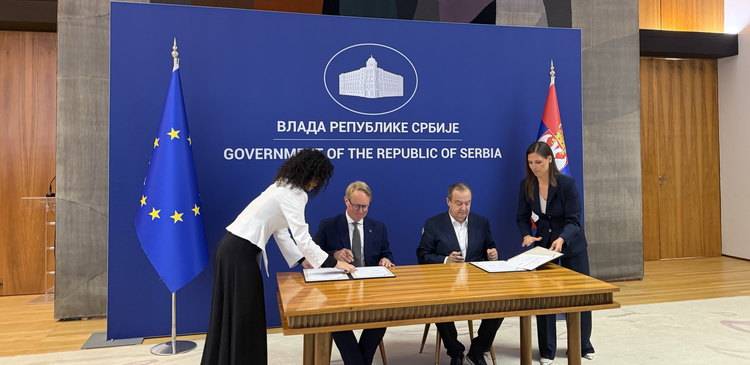
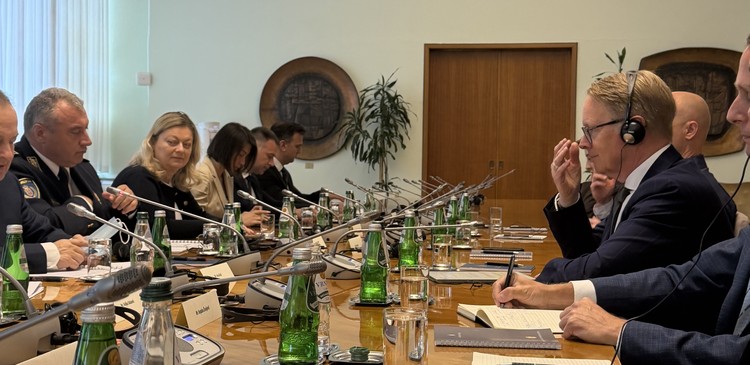
The Partnership Academy Agreement, signed in Belgrade on 1 June by Mr Leijtens and Serbian Minister of Interior Ivica Dačić, brings the Ministry of Interior of Serbia into the Frontex Partnership Academies network as an associated training institution in a non-EU country. The agreement gives Serbian border guards access to Frontex workshops, courses, common projects, exchange and mobility programmes and eLearning, with the aim of strengthening common educational standards and supporting the modernisation of border and coast guard training. It also reflects a commitment to align training curricula for Serbian border guards with Frontex standards, which fits within the wider Chapter 24 obligations of Serbia as an EU candidate country.
During the visit, Mr Leijtens took part in a patrol of the Drina River, the natural border with Serbia, with the Director of Border Police, Mr Mirko Kuprešaković and the Acting Minister of Security of Bosnia and Herzegovina, Mr Ivica Bošnjak. At a ceremony in Sarajevo, the Bosnian Border Police awarded Mr Leijtens its highest distinction in recognition of the cooperation between the two organisations, and Mr Leijtens presented certificates of appreciation to Bosnian officers who have worked alongside Frontex Standing Corps personnel in the field.
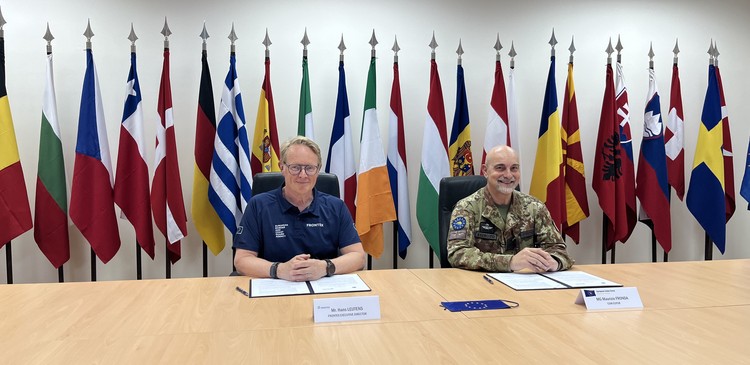
The Letter of Intent with EUFOR Althea, signed in Sarajevo on 2 June, paves the way for practical cooperation between the two organisations. The arrangement reflects the EU’s Integrated Approach to aligning civilian and military instruments active in the same operational space. The Letter sets out, among other commitments, regular information exchange and closer coordination between the two organisations. As a next step, Frontex and EUFOR Althea will negotiate a working arrangement.
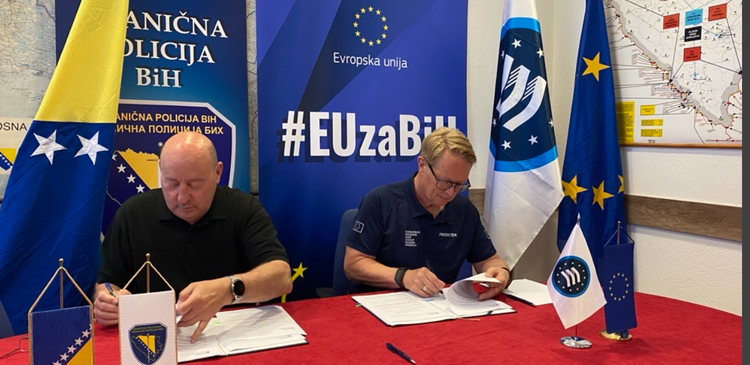
Also, in Sarajevo on 3 June, Frontex and the Bosnian Ministry of Security signed a Memorandum of Understanding on a complaints mechanism, giving people who interact with Frontex officers operating in the country a route to raise concerns about their treatment. The Memorandum bridges the existing complaints mechanisms at Frontex and at the Bosnian Border Police, ensuring that the two systems work together to address any issues arising from the joint operation.
The MoU follows similar arrangements already in place with Albania, Montenegro, North Macedonia and Serbia. Frontex’s Fundamental Rights Officer Jonas Grimheden, and Deputy Fundamental Rights Officer Grigorios Tsioukas took part in the visit.
During the visit, the Agency also signed two Transfer Agreements on IT equipment for the Bosnian Border Police, covering its National Coordination Centre and border check operations, and met with participants in an English-language course for Bosnian border officers delivered under the EU Regional Support to strengthen border security capacities in the Western Balkans, a Frontex-led project funded by the European Commission.