Trafficking
in human beings is a separate offence from smuggling. Smuggling is the
business of moving people across a border for payment. Trafficking
involves exploiting them, and those exploited are victims of crime.
The
matches against INTERPOL’s databases came from checks that national
officers ran on people and documents. They are not a further count of
people stopped. Two involved Red Notices, the international alerts
INTERPOL issues for people wanted for prosecution in a member country,
here for migrant smuggling and human trafficking.
Specialised Activities Sector officer, Jewgeni Ilz,
who coordinated Joint Action Days Danube 11 for Frontex, said:
"Smuggling networks work across borders, so the people investigating
them have to
as well. What made this operation work was not the checks on their own.
It was 17 countries looking at the same picture at the same time, able
to act on each other’s information within hours rather than weeks."
Operations
of this kind are known as Joint Action Days. For a short, intensive
period, national authorities run coordinated checks at the same time and
pool what they find. Danube 11 was the eleventh operation in a series
focused on this route. It was one of several activities run under the
Task Force Western Balkans, which Austria leads and which brings
together EU and Western Balkans authorities working against cross-border
crime.
Austria, Bulgaria, Croatia, Germany, Greece, Hungary, Poland, Romania, Slovakia and Slovenia took part, together with Albania, Bosnia and Herzegovina, Moldova, Montenegro, North Macedonia, Serbia and the United Kingdom. Europol, INTERPOL
and Eurojust supported the operation alongside Frontex. So did EU4FAST,
an EU-funded programme that helps Western Balkans countries tackle
migrant smuggling and human trafficking. INTERPOL deployed two officers
from its Human Trafficking and Smuggling of Migrants Unit for the
operational phase.
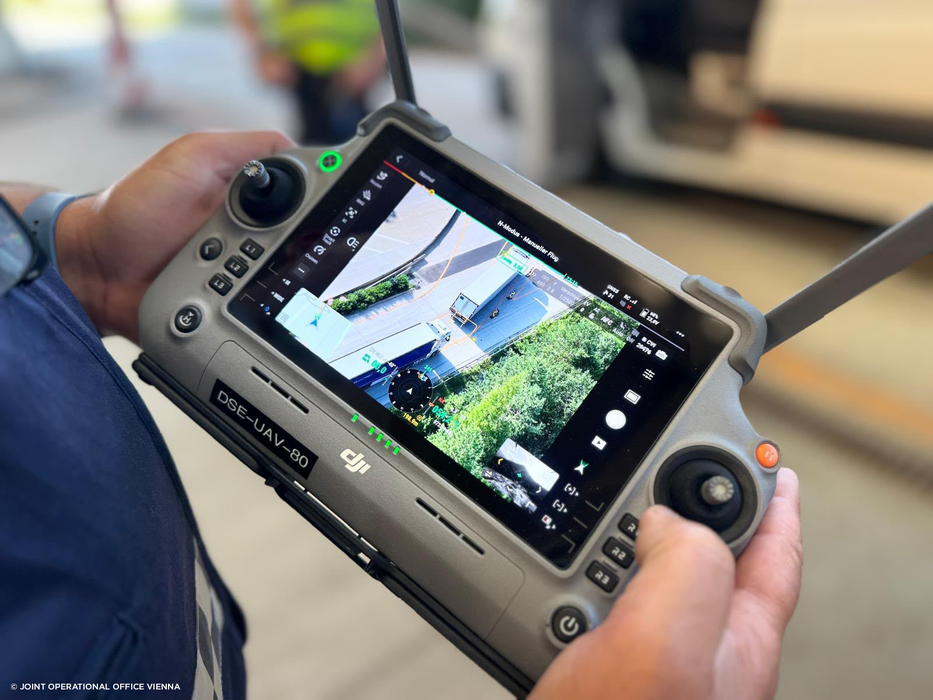
Frontex, the European Border and Coast Guard Agency, coordinated the operation. It linked the national teams to the Joint Operational Office (JOO) in Vienna and
supported the exchange of information between them. Working this way
also allowed countries to connect cases that would have looked unrelated
on their own.