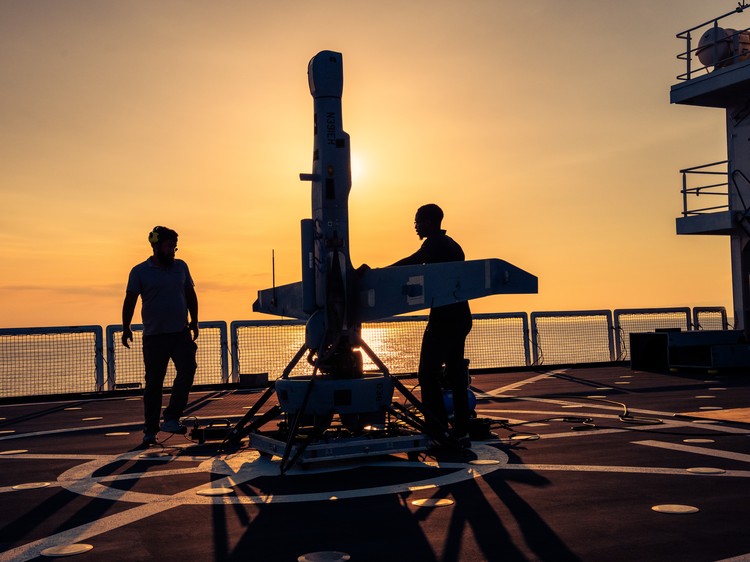
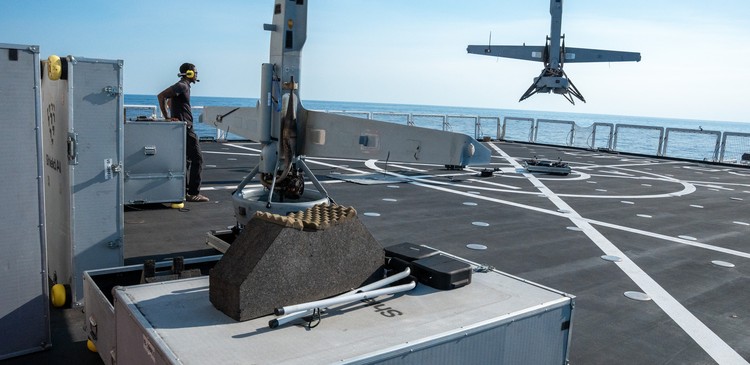
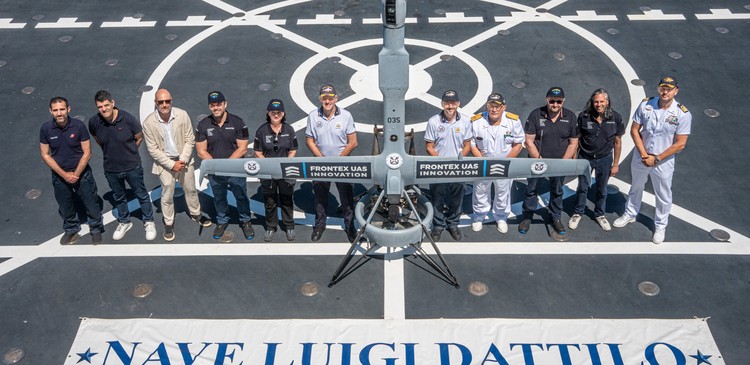
Frontex has flown its largest drones yet from a ship at sea. In a pilot project with the Italian Coast Guard that ran from May to July 2026, two drones that take off and land vertically operated day and night from a patrol vessel in the central Mediterranean, giving the crew a live picture of what was happening far beyond what they could see from the deck. It was the first time that drones of this class, in the 50 to 100 kilogram range, and two of them operating together, have flown as a fully integrated part of a vessel in a Frontex pilot project.
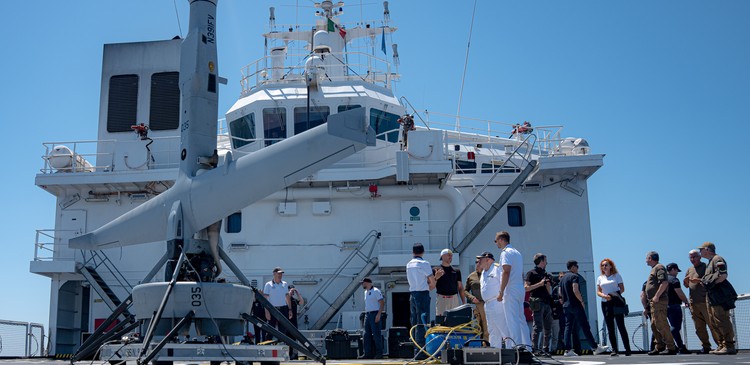
The pilot project was run by Frontex, the European Border and Coast Guard Agency, together with the Italian Coast Guard, and hosted on board the Offshore Patrol Vessel Dattilo. Its aim was to test whether drones and a ship can work as a single system, extending the vessel’s line of sight and supporting the full range of coast guard tasks, from monitoring traffic at sea to search and rescue.
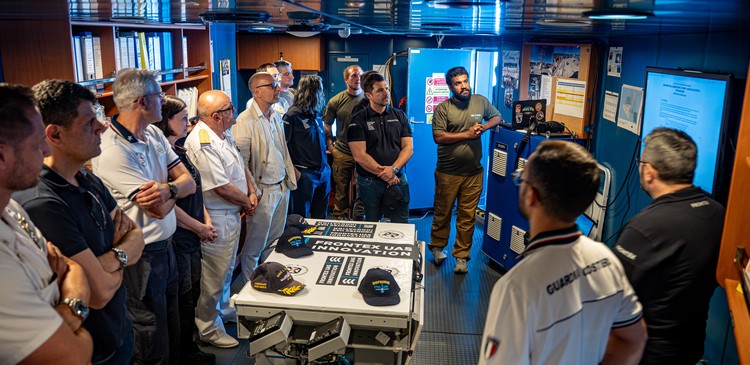
The results were put to the test on 8 July, when senior Frontex and Italian Coast Guard representatives watched a live demonstration on board. In a search and rescue simulation, one of the drones located a small inflatable boat and helped coordinate its rescue.
Over 19 days at sea, from 27 June to 15 July, the drones completed the full 150 flight hours planned for the trial, two days before its official close. At the peak of the trial, the two aircraft were airborne simultaneously for a combined 20 hours a day, and flights proved a range of 150 kilometres from the ship, far beyond what its sensors alone can see, with the aircraft capable of flying further still. Throughout, they streamed live video into a Common Operational Picture, a single live view of the situation at sea shared by the ship and command centres ashore. Following system integration tests from mid-May, flight operations were built up in three stages, with flights gradually becoming longer, more complex, more operationally relevant, and more exposed to demanding conditions at sea.
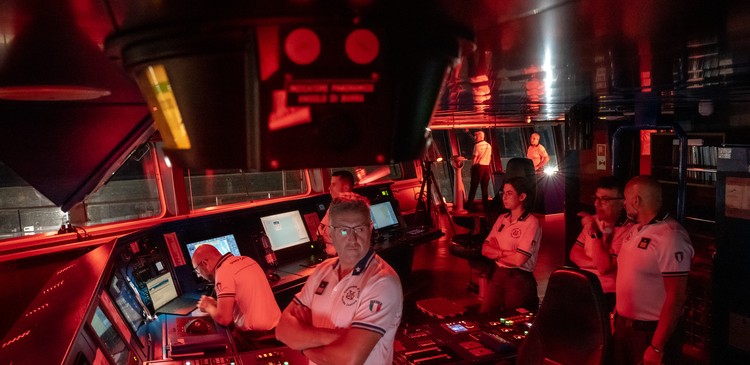
One of the trial’s key findings was that the drones did not remain a temporary add-on. Communication antennas, ground data terminals, and control stations were installed in the vessel’s operations room, making the drones a fully integrated part of the ship and a working instrument in the daily routine of the Italian Coast Guard. The innovation lay in that integration: the technology, a newly developed concept of operations, and a new deployment model working together as one package.
The drones were owned and operated by two specialised contractors, Global SAT as the main contractor and Shield AI as the subcontractor, which together delivered a full service from take-off to data delivery. All equipment was designed to be mobile, easy to deploy, and compatible with Frontex and Italian Coast Guard operations.
Frontex will now carry out a full evaluation of the results. The project has already produced a set of guidelines and lessons learned for integrating drones into day-to-day border and coast guard operations, and its findings will be shared with Member States and EU agencies in the autumn. The outcomes will feed into Frontex’s wider plans to modernise surveillance across the European Border and Coast Guard community.
Email: press@frontex.europa.eu