Today, Frontex, the European Border and Coast Guard Agency, as part of the EU Agencies Network on Scientific Advice (EU-ANSA), co-signed a joint statement reaffirming the central role of EU agencies in translating scientific research into evidence-based policymaking.
Drawing on lessons from recent global crises, Frontex highlights that its role as a "knowledge broker" is essential to ensuring that European Integrated Border Management (EIBM) remains resilient in a volatile geopolitical landscape.
Aligned with its Capability Roadmap 2037, Frontex will focus its future research engagement within the Horizon Europe 2028-2034 framework in several critical areas:
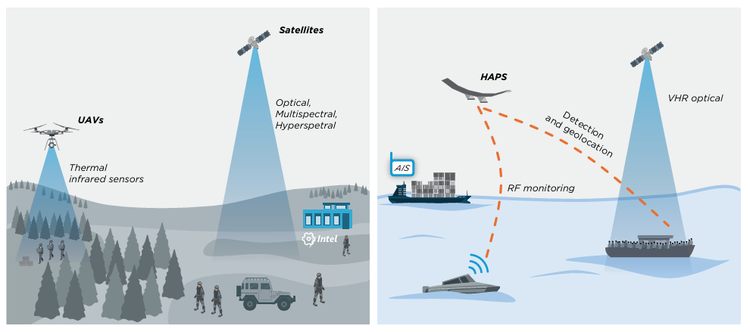
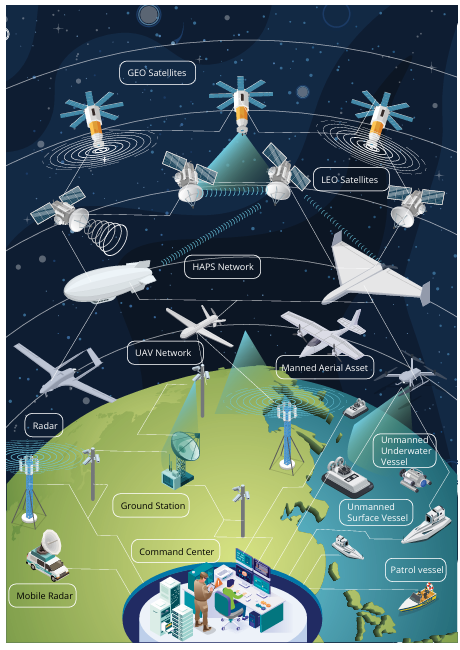
- Enhancing the European Surveillance Architecture by integrating new capabilities: Progressively integrating advanced surveillance platforms, sensors, and payloads across the air, land, maritime, and space domains. A key enabler of this evolution is the growing contribution of space-based capabilities, including Earth Observation services from Copernicus, precise positioning and timing from Galileo, and secure government communications through GOVSATCOM.
- Proactive Surveillance & Autonomy: Investing in multi-sensor networks and autonomous systems (air, sea, and land) to shift from a reactive to a proactive "predict and prevent" posture.
- Situational Awareness: Leveraging Artificial Intelligence capabilities to process vast amounts of data for early warning systems and predictive risk analysis.
- Smart & Seamless Borders: Developing next-generation biometric verification and non-intrusive detection technologies to ensure swift, secure, and contactless border crossings.
- Strategic Autonomy & Sustainability: Researching smart materials and energy management to reduce external dependencies and decrease the environmental footprint of border operations.
Frontex welcomes the proposed Horizon Europe 2028-2034 programme and calls for the proactive involvement of EU agencies in research programming to bridge the gap between scientific research and innovation and operational reality.