Severe weather conditions across the key migratory routes into the European Union continued to contribute to the downward trend of irregular border crossings. The number of detections fell sharply in the first two months of 2026, dropping by 52% compared with the same period last year. Nearly 12 000 irregular crossings were recorded, according to preliminary data collected by Frontex.
News
Frontex: 52% drop in irregular border crossings in the first 2 months of 2026
2026-03-12
Key highlights:
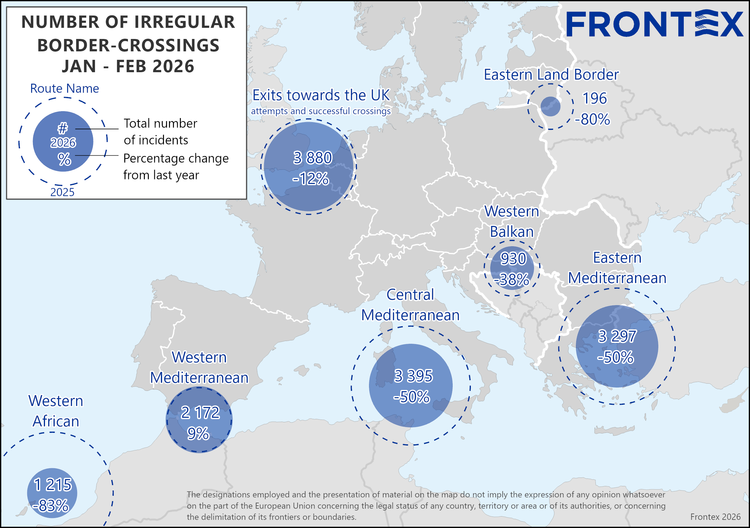
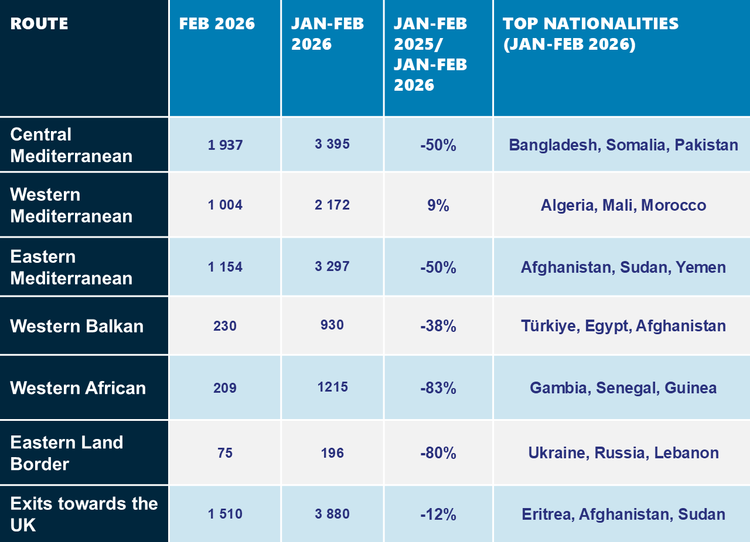
The Central Mediterranean was the busiest route, accounting for nearly 30% of all the irregular entries into the EU.
The Western African route saw the steepest decline, with detections down by 83% compared with the first two months of 2025.
The most frequently registered nationalities were Afghan, Bangladeshi, and Algerian.
The number of irregular arrivals continues to fall, but the human cost keeps rising. According to the International Organization for Migration, nearly 660 people lost their lives in the Mediterranean in the first two months of 2026. Many of these tragedies occurred due to severe weather conditions. Criminal smuggling networks are well aware of the risks. They send desperate people out on unseaworthy boats regardless, because there is money to be made.
Meanwhile, the escalating situation in the Middle East risks fuelling displacement in the region in the coming months. So far, this has not had a noticeable effect on the migratory situation at the EU's external borders. Frontex continues to monitor developments closely.
With over 3 000 officers present at the EU’s external borders, Frontex continues to support national authorities in safeguarding Europe’s borders and saving lives at sea.
The Eastern Central was the most active migratory route into the EU, with nearly 3 400 arrivals recorded in January-February. But the detections along the route fell by 50% year-on-year.
The Western Mediterranean and Eastern Mediterranean routes each registering around 1 200 arrivals.
Attempts detected on exit towards the UK across the Channel, which include both those who reached the UK and those prevented from leaving, fell by 12% to nearly 3 900.
* Note: The preliminary data presented in this statement refer to the number of detections of irregular border crossings at the external borders of the European Union. The same person may cross the border several times in different locations at the external border.