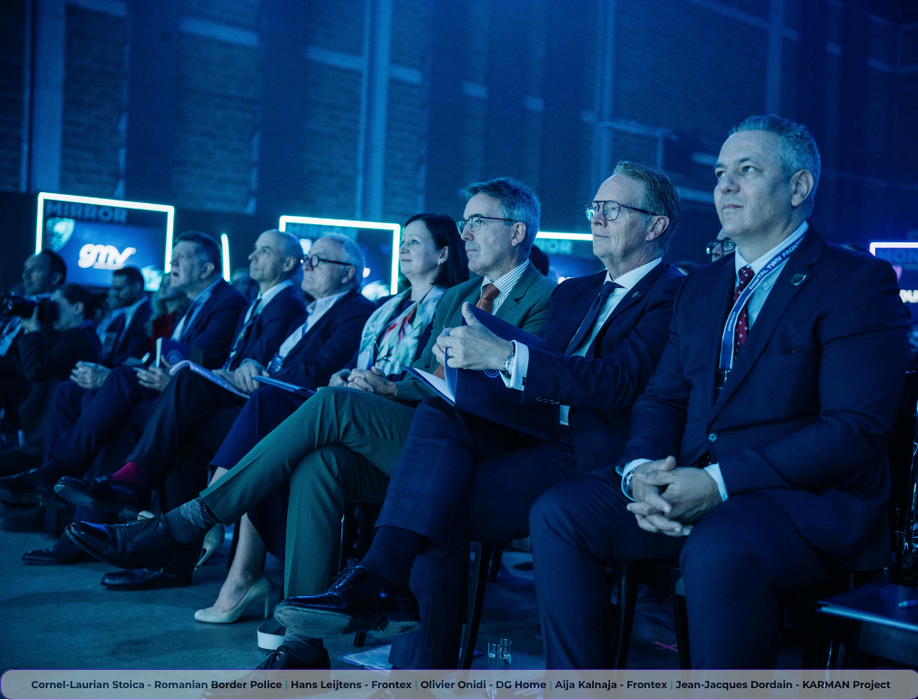
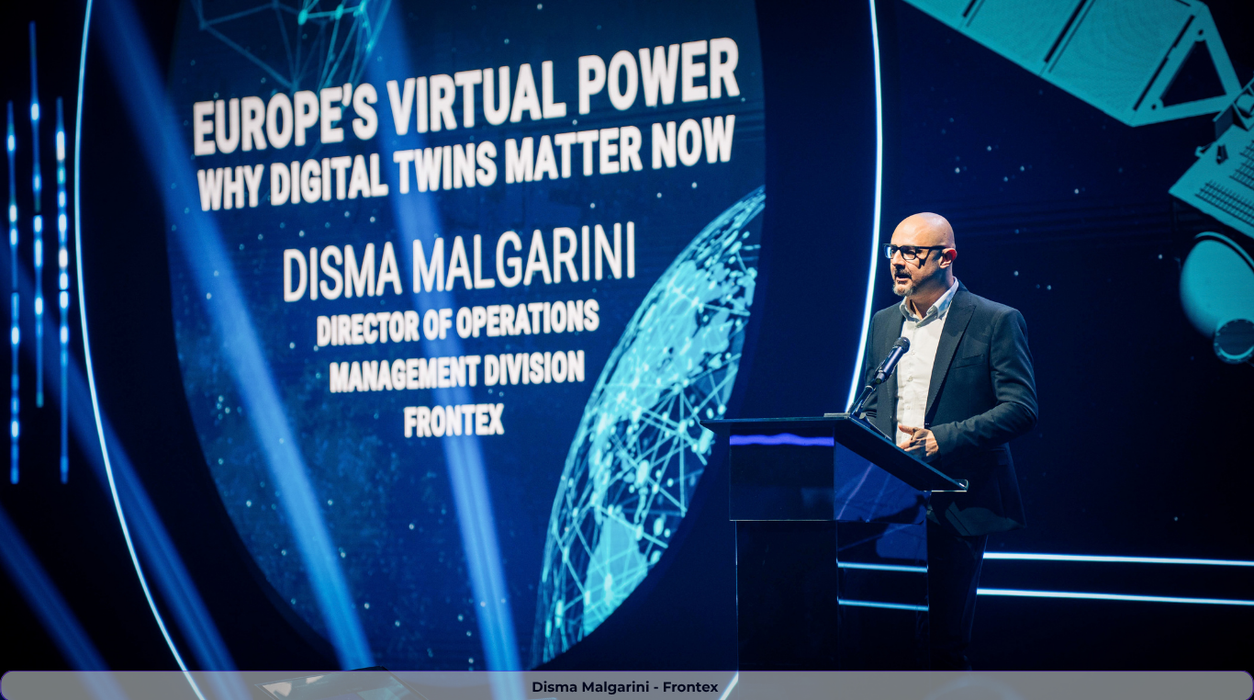
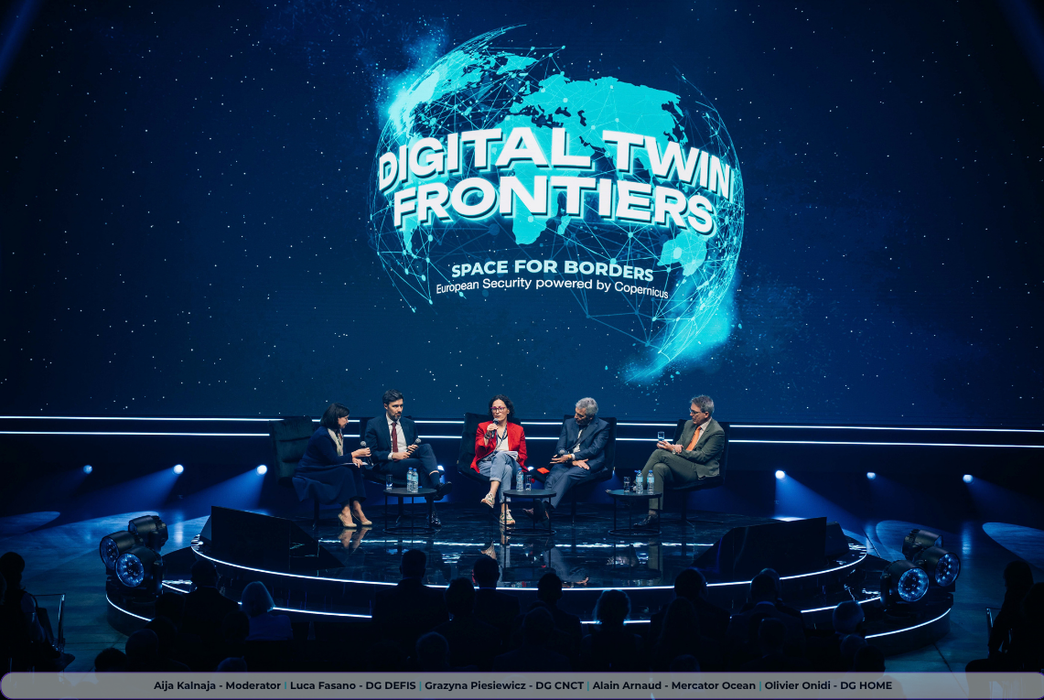
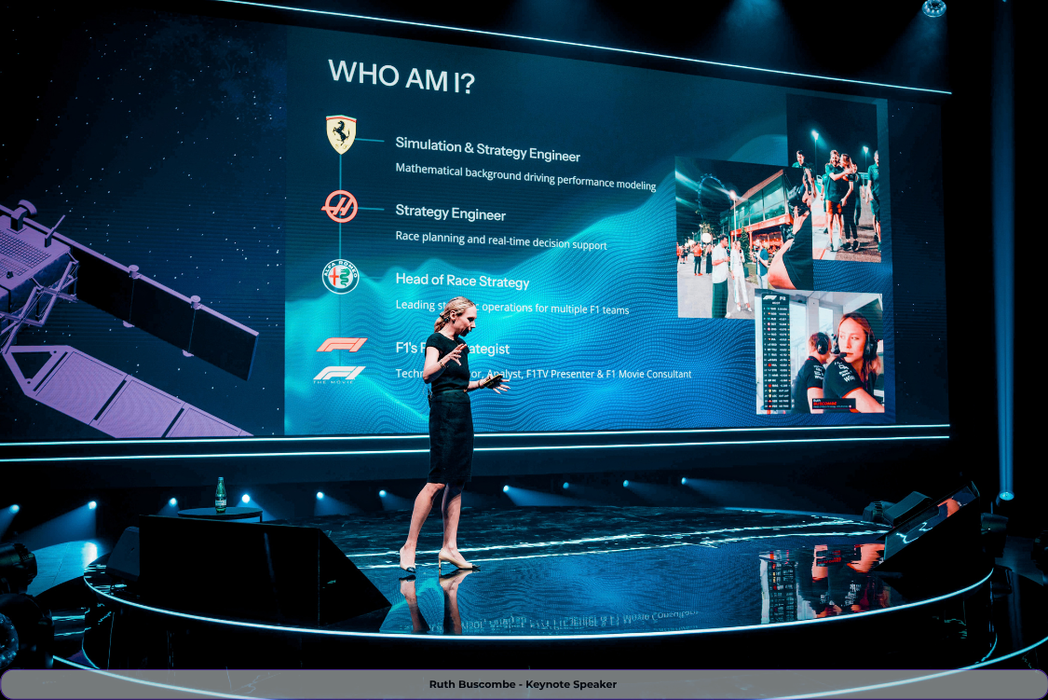
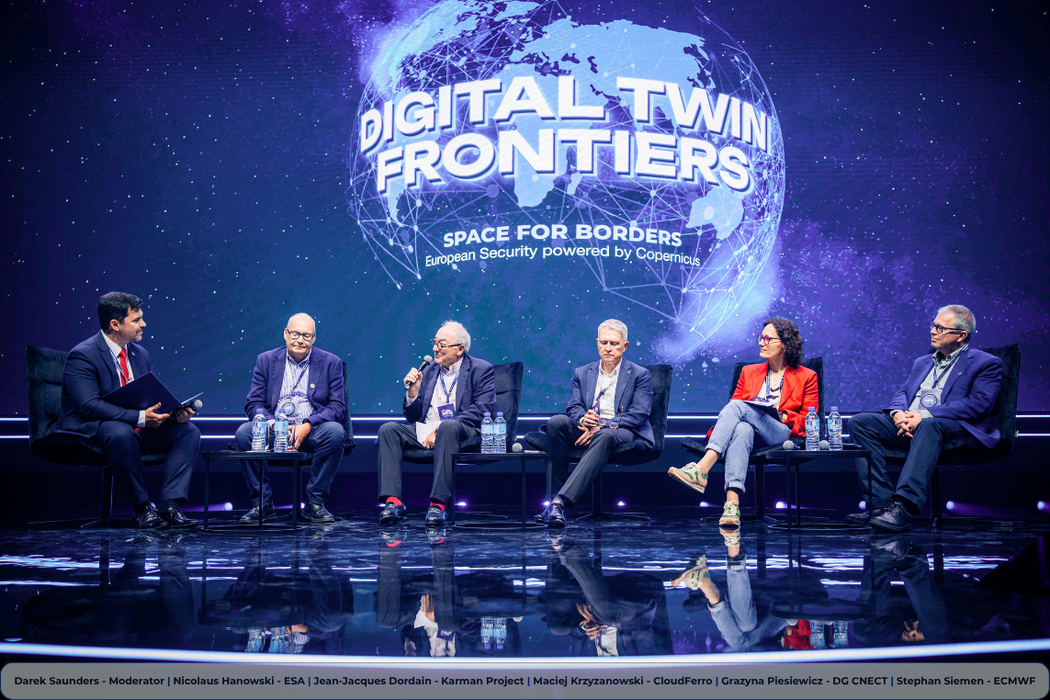
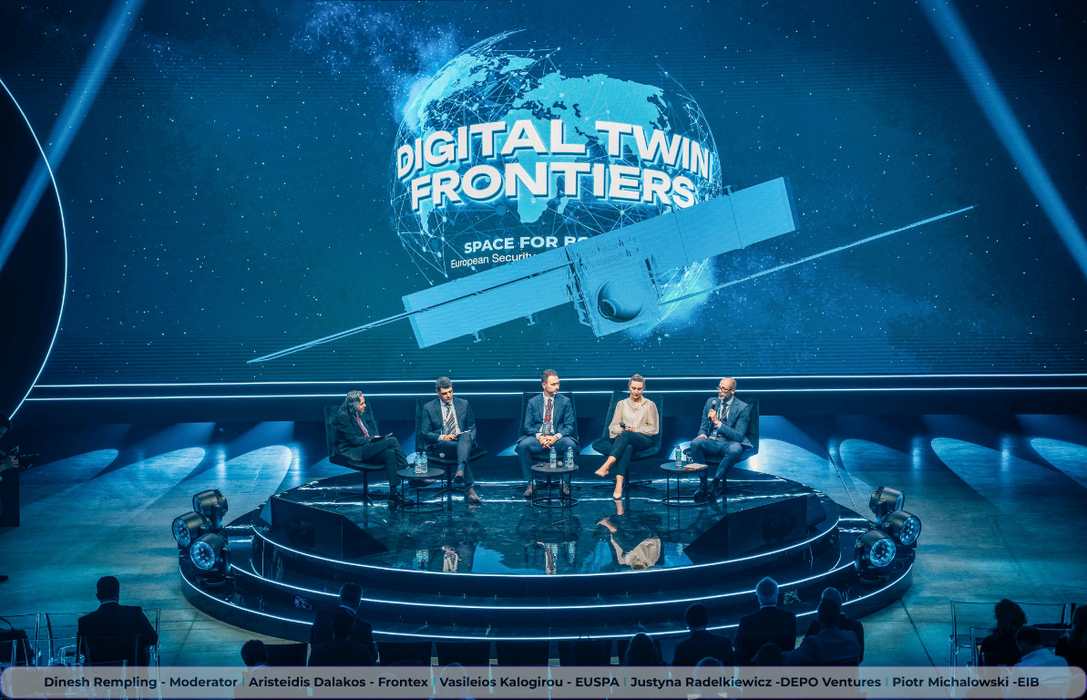
Frontex brought around 300 people from the EU institutions, Member State border authorities, research, and industry to Warsaw for Digital Twin Frontiers, a one-day event on one question: how can Europe see what is coming at its external borders, not only what is happening now?
A digital twin is a live digital copy of a real environment. For the European Border and Coast Guard Agency, that means satellite imagery, weather data, vessel movements, and readings from ground sensors joined into one living picture of the border. The picture can be played forward, so that decisions can be tested before they have to be taken, and it serves an operation before, during, and after.
In a maritime setting, for example, weather forecasts, vessel movement patterns, past behaviour, and live surveillance can be combined to show how a situation is likely to develop and where resources will be needed: looking at the right stretch of water before first light, not after the first distress call.
Europe’s starting point is strong. Frontex operates the border surveillance component of the Copernicus Security Service, and through the Agency’s EUROSUR Fusion Services, information derived from Copernicus, Europe’s Earth observation programme, already reaches Member State border authorities as an operational service every day. The digital twin is the next step: joining these feeds into a single picture that looks ahead.
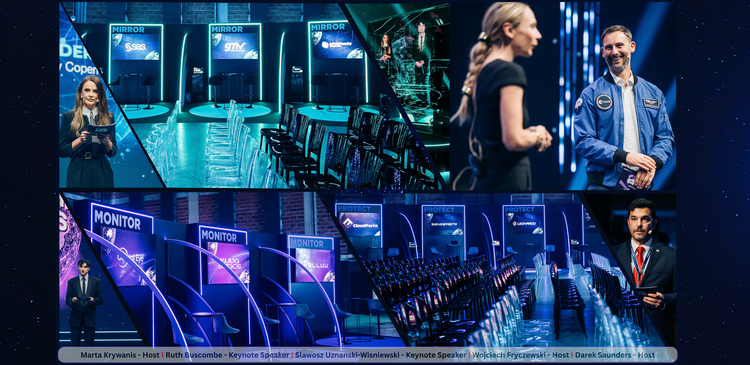
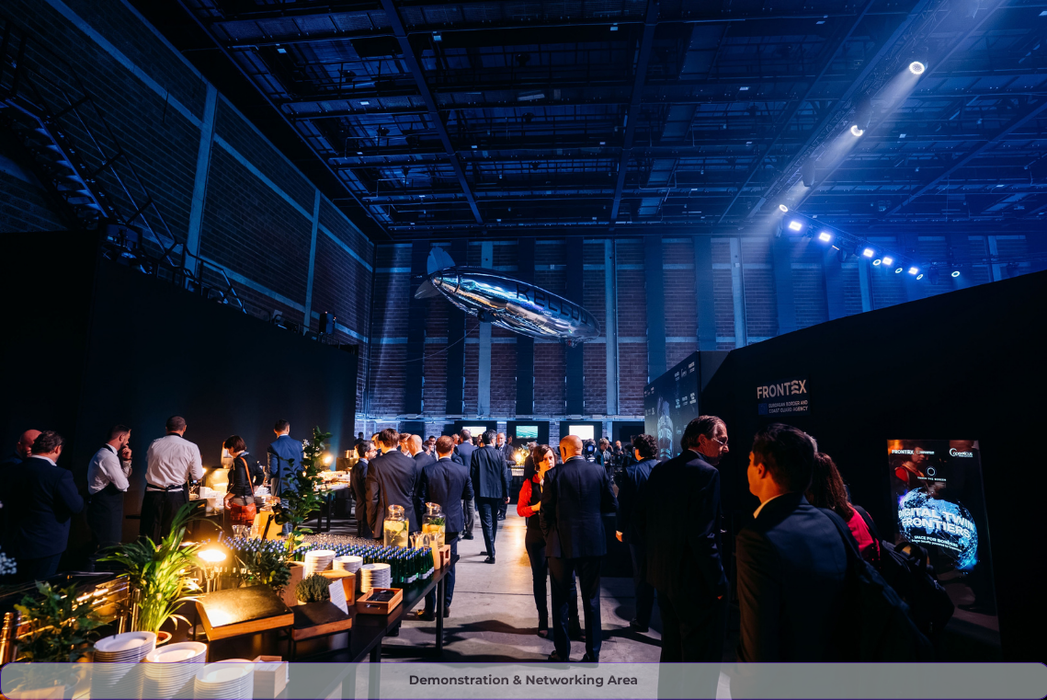
At the heart of the event was a technology showcase, The Living Architecture of Europe’s Digital Twins, where 15 European companies, from major space and defence groups to young start-ups, demonstrated what already exists:
3D reality mapping that turns terrain into data an officer can act on, and simulated borders where equipment, coverage, and scenarios can be tested before a single resource is committed.
The message of the showcase was simple: the building blocks of the digital twin already exist, and they are European.
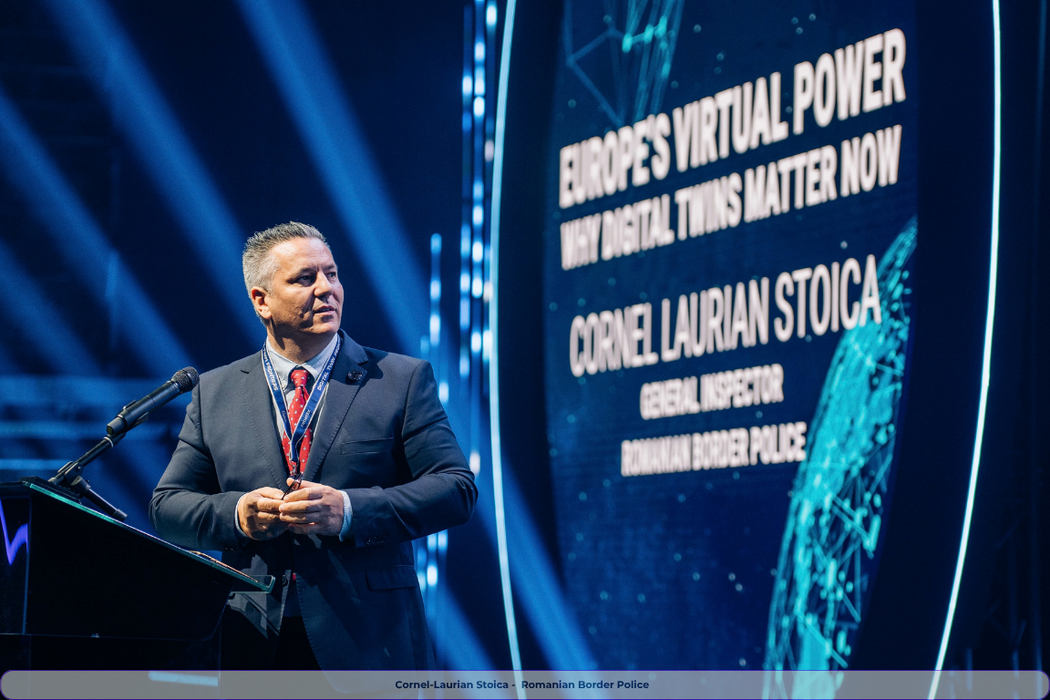
Cornel-Laurian Stoica, General Inspector of the Romanian Border Police, highlighted the potential of digital twins to support tactical and strategic border management decisions, building on the force’s partnership with Frontex in the 2025 Digital Twin Evolution Prize Contest. The experience showed that interest in digital twins is driven by operational needs and the better use of resources, not technology for its own sake.
In a video message, Josef Aschbacher, Director General of the European Space Agency, reflected on the role that space-based capabilities, and digital twins in particular, can play in strengthening Europe’s border management architecture.
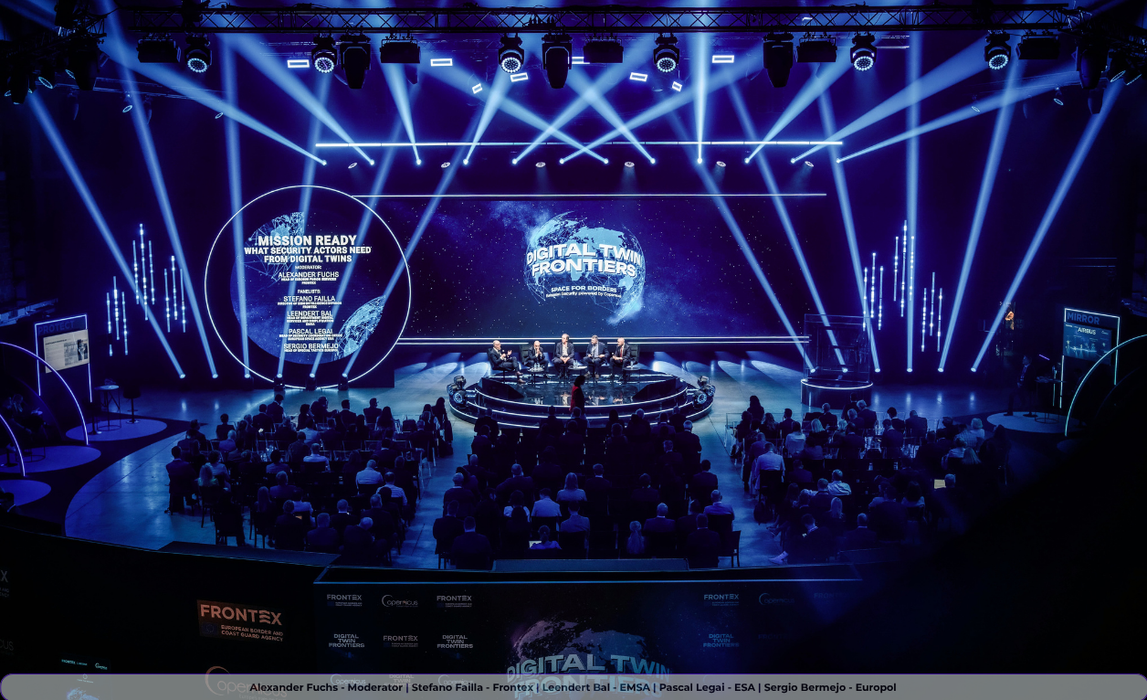
Across the sessions, experts from the European Commission, Frontex, the European Space Agency, EUSPA, Europol, EMSA, ECMWF, and Mercator Ocean International stressed interoperability, cooperation, and putting the end user at the centre of technology development: digital twins should not only combine data, but turn complex information into usable insight for the people making decisions in the field. Participants also discussed the rapid development of artificial intelligence and the importance of protecting fundamental rights and personal data as these capabilities grow.
Border management is high on the European agenda. In her State of the Union address on 16 September, President von der Leyen said Europe would strengthen Frontex and improve its early warning systems, so that large-scale movements can be detected and anticipated. The European Commission is expected to propose a revision of the Agency’s mandate this autumn.
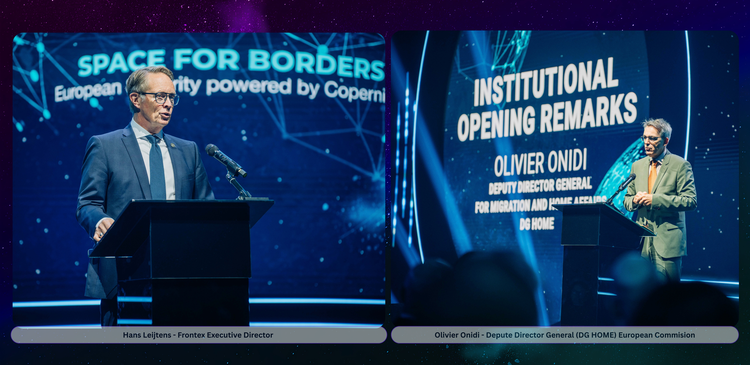
“Three hundred people chose to spend this day on the future of Europe’s borders,” Leijtens told participants. “You are not waiting for that future. You are here to build it.”
Contact: Frontex Press Office,
press@frontex.europa.eu ·
Spokesperson: Krzysztof Borowski,
+48 667 667 294